
YOU’RE NOT SEEING THIS.

The danger looks different now.
An ordinary photo. A familiar-looking profile. A private message. A group chat.
Learn how online harm can hide in familiar places—and what to say and do if your child needs help.
Four ordinary things worth a closer look
These examples show ways online harm can begin. They are fictional scenarios, not accounts of specific local children.

The Photo
SHE NEVER SENT ANYTHING.
ONE PHOTO WAS ENOUGH.
AI and image-editing tools can turn an ordinary photo into a fabricated intimate image. A child does not have to send an intimate photo for someone to make one and use it to humiliate or threaten them.
In a 2024 U.S. survey published by Thorn in 2025, 6% of teens ages 13–17 said someone had created a deepfake nude of them. [1]
Whether your child shared an intimate image or never sent one, start with support. They are not to blame for someone else’s abuse.

The Profile
12 MUTUAL FRIENDS.
NONE OF THEM HAVE MET HER.
Shared followers. The same school. The same favorite team. A few familiar details can make an account feel trustworthy. But photos can be stolen, profiles can be copied, and even a real friend’s account can be hacked.
Ask: “How do you know this person?” If your child points to mutual friends, ask whether any of those friends have actually met them. Following the same people doesn’t mean you know who’s behind the account.
The Message
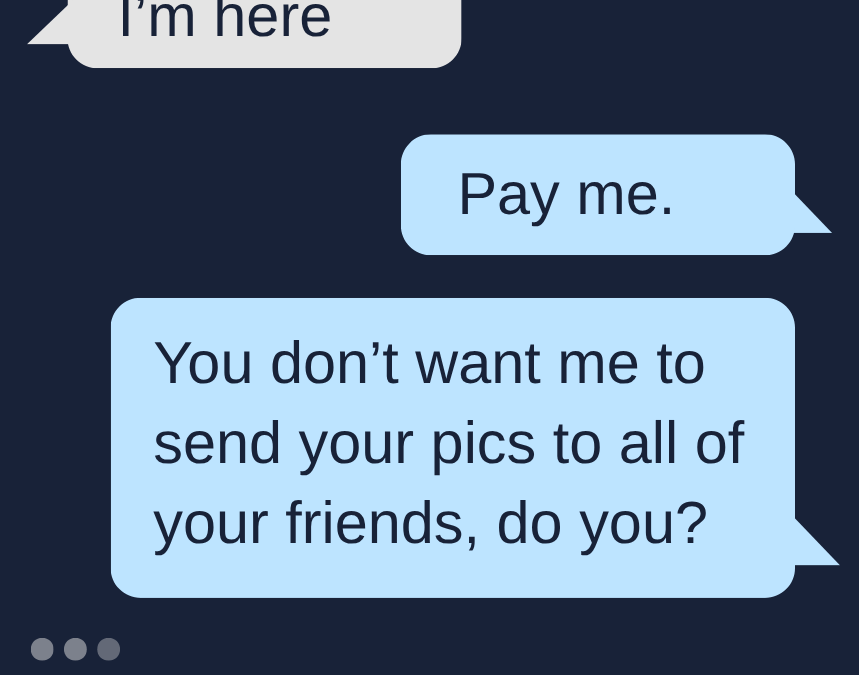
A CONVERSATION BECOMES A DEMAND.
Someone threatens to send intimate images of your child to their teammates, friends, or family unless they pay, send more pics, or agrees to meet. The images could be real or fake. That’s sextortion—and paying doesn’t guarantee the threats will stop.
The person making the threat isn’t always a stranger. In Thorn’s U.S. survey published in 2025, 36% of young people who experienced sextortion as minors knew the person threatening them offline during their first experience. [2]
Help your child stop responding and get support, even if they have already sent an image or paid. Start with: “I’m glad you told me. You don’t have to handle this alone.”
The Group Chat
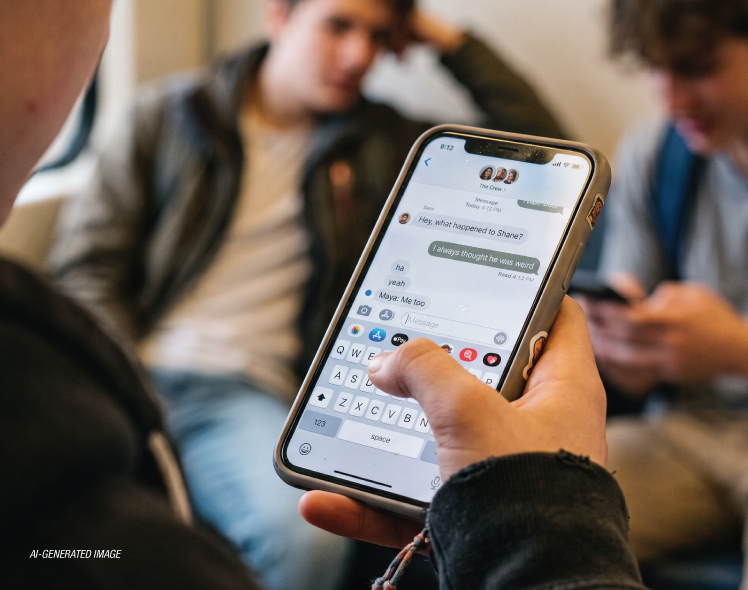
EVERYONE IN THE GROUP CHAT SAW IT.
EXCEPT YOU.
A group chat can become a place for rumors, humiliating polls, threats, or images shared without permission. The people involved may be classmates, friends, or someone your child once trusted.
New York public schools reported 4,396 cyberbullying incidents in the 2023–24 school year. These are reported incidents, not a count of individual children or specifically group-chat incidents; some cyberbullying goes unreported. [3]
If your child sees it happening, encourage them not to join in or pass it along. They can support the person targeted and tell a trusted adult without forwarding the image.
Why the conversation matters
In Thorn’s 2025 survey, one in five minors who had an online sexual interaction said they turned to no one for support. The survey included young people ages 9–17; online sexual interactions included sexual messages and requests for nude images. [4]
A calm conversation now gives your child a way to ask for help later.
ASK
Ask about their experiences, not just their apps.
Try: “What happens when someone in a group chat gets targeted?” or “What would make it hard to come to me if something happened online?”
LISTEN
Listen without making them defend every choice.
Let them explain what happened in their own words. If they are not ready to talk, remind them they can come back to you or another adult they trust.
STAY CALM
Stay calm if they share something serious.
Thank them for telling you. Start with: “I’m glad you told me. You don’t have to handle this alone. Let’s work out what to do next.” Focus on safety and support, not blame.
Keep this guide handy.
Save the warning signs, conversation starters, and places to get help.
[ For young people ]
You can ask for help
even if you trusted the person, sent a photo, or already paid. Tell a parent, caregiver, counselor, or another adult you trust.
Someone else’s decision to threaten or exploit you is not your fault.
If something has happened
If you’re helping a child, take these steps together. If this is happening to you, ask an adult you trust to help.
If anyone is in immediate danger, call 911.
STOP
Stop responding to threats. Do not pay, send more images, or agree to meet. Tell an adult you trust. If you have already paid or sent something, you can still get help.
SAVE THE DETAILS
Keep usernames, profile links, dates, payment requests, and threatening text messages.
Do not download, forward, or ask someone to send an intimate image of a minor. Avoid screenshots that copy intimate imagery. Keep existing messages and account information available, and ask law enforcement how to preserve them safely.
REPORT
Report suspected child sexual exploitation to NCMEC’s CyberTipline and report the account to the platform. Contact law enforcement about threats or extortion.
Report and block the account; do not remain in contact to collect more evidence.
Where to get help
If anyone is in immediate danger, call 911.
Report child sexual exploitation.
NCMEC’s CyberTipline accepts reports of suspected child sexual exploitation, including sextortion. New York State Police’s Internet Crimes Against Children program also directs the public to CyberTipline. A trusted adult can help you make a report.
This is the reporting resource. The support services listed on this page can help you talk through options and find assistance.
NCMEC 24/7 Tipline: 1-800-843-5678 (1-800-THE-LOST)
Learn about New York State Police’s ICAC program.
Report threats or extortion to law enforcement.
Contact your local police department, New York State Police, or the FBI about threats or extortion. You can report to the FBI at tips.fbi.gov or call 1-800-225-5324 (1-800-CALL-FBI). If anyone is in immediate danger, call 911.
Get help with an intimate image.
NCMEC’s Take It Down can help limit the spread of nude, partially nude, or sexually explicit images taken before someone turned 18. It uses a digital fingerprint of the image so participating platforms can look for matches. The image stays on the device; removal is not guaranteed across the internet.
Do not download an image or have someone send it to you to use the service.
If you do not have it on the original device, make a CyberTipline report for help. For fabricated images, report the situation to CyberTipline and ask for guidance.
NCMEC 24/7 Tipline: 1-800-843-5678 (1-800-THE-LOST)
Get victim support in Orange County
Orange County’s Crime Victim Assistance Program offers support, referrals, help understanding the criminal justice process, and assistance with victim compensation claims. A counselor can help you identify available services and next steps.
Call the Goshen office: 845-862-8200
Monday–Friday, 9 a.m.–5 p.m.
This program provides victim assistance; contact police to report threats or extortion.
Talk with a New York support advocate
The New York State Office of Victim Services can help you find victim assistance programs and information about compensation for eligible crime-related expenses.
Call 800-247-8035, Monday–Friday, 9 a.m.–5 p.m.
Get school support.
If peer bullying or image sharing affects your child at a New York public school, contact the school’s Dignity Act coordinator or use the district’s bullying/DASA reporting form. A counselor, administrator, or another trusted school staff member can help you find the right contact. Tell them what happened without forwarding intimate images.
A school report does not replace reporting suspected exploitation or threats.
This public service campaign was not funded at the taxpayers’ expense. Instead, costs were covered by asset forfeiture funds seized from some people convicted of crimes.
Sources & review date
[1] Thorn, Deepfake Nudes & Young People, March 2025. Figure 11. U.S. survey conducted Sept. 27–Oct. 7, 2024; the 6% finding concerns 724 teen respondents ages 13–17 within the full sample of 1,200 respondents ages 13–20. Read the deepfake research
[2] Thorn, Sexual Extortion & Young People, June 2025. Figure 7a. The 36% finding concerns 285 respondents ages 13–20 who reported experiencing sextortion as minors, describing their first experience. The deepfake and sextortion reports draw on the same 2024 survey. Read the sextortion research
[3] New York State Comptroller, Violent and Disruptive Incidents and Bullying in New York Schools, 2026. In the 2023–24 school year, public schools reported 4,396 cyberbullying incidents statewide. Counts represent reported incidents, not unique children, Orange County cases, or specifically group-chat incidents. he report notes possible underreporting. Read the New York school safety report
[4] Thorn, Youth Perspectives on Online Safety, 2025. Survey of 1,003 U.S. minors ages 9–17, November–December 2025; published 2026. Figure 21. The one-in-five figure concerns the subgroup who experienced an online sexual interaction. Read the youth online safety research
FBI guidance on financially motivated sextortion | NCMEC Take It Down FAQ
Guidance reviewed October 2026